

A Simple, Thoughtful Approach
Wine tasting doesn’t need to feel intimidating or overly technical. At its core, it’s really about slowing down, paying attention, and letting the wine tell its story one step at a time. Bordeaux wines, in particular, reward this kind of patience. They’re layered, expressive, and often evolve noticeably from the moment they’re poured to the final sip.
Whether you’re tasting at a château, at a wine bar in Bordeaux, or back home with a bottle you’ve been saving, following a few simple steps can completely change how much you get out of the experience. Think of this less as a checklist and more as a gentle rhythm you fall into with the wine.
Visual Examination: First Impressions Matter
Observe: Hold your glass by the stem or base and tip it slightly to one side. Look at the wine from the center out to the rim. This first glance already offers clues about what’s in your glass.
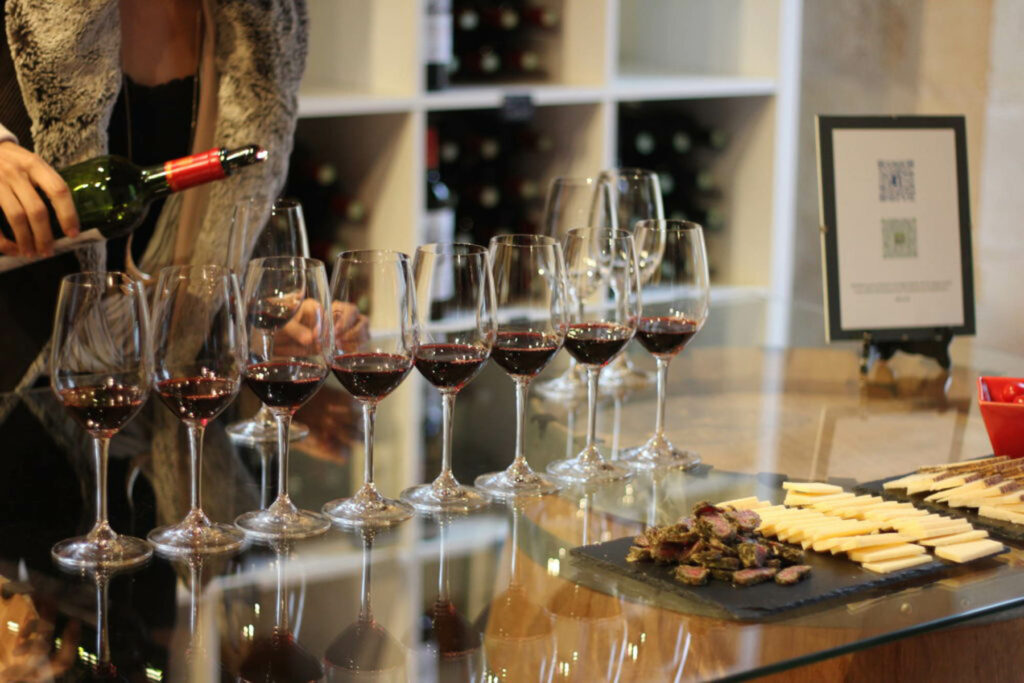
A young Bordeaux red will often appear deep and saturated, sometimes with purple or inky tones. As Bordeaux wines age, that color softens. You may notice garnet hues or even brick-red edges, especially near the rim. These shifts can hint at the wine’s maturity, structure, and even how it might behave on the palate.
This moment is about setting expectations. You’re not judging the wine yet, just getting acquainted.
Aerating the Wine: The Art of Swirling
Swirl: Gently swirl the wine in a circular motion. This isn’t just for show. Swirling increases the wine’s contact with oxygen, helping it open up and reveal more of itself.
Bordeaux wines often benefit from this step more than many people realize. Their structure and complexity can feel tight at first. A little air helps soften edges, lift aromas, and bring hidden layers forward. Even a few seconds of swirling can make a noticeable difference.
If you’ve ever thought a wine changed dramatically from the first sip to the last, oxygen is usually the reason why.
Engaging the Olfactory Senses: A Symphony of Aromas
Smell: Bring the glass to your nose while the wine is still gently moving. Take a calm, unhurried inhale.
Bordeaux wines are known for their aromatic range. You might pick up dark fruits like blackberry or black cherry, notes of plum, or more savory elements like cedar, tobacco, leather, or earth. Some wines show subtle floral tones or hints of spice.
There’s no rush here. Smell more than once. Aromas often evolve just as much as flavors do, especially as the wine continues to breathe.
The Palate Experience: An Explosion of Flavors
Taste: Take a sip, but don’t swallow right away. Let the wine move around your mouth.
As it coats your palate, notice how different sensations appear. Is there freshness or acidity along the sides? Do you feel structure or grip from the tannins? Is there a sense of richness or weight in the center?
Bordeaux wines tend to offer balance rather than a single dominant note. Fruit, acidity, tannin, and alcohol all play a role. Letting the wine move across your tongue helps you understand how these elements work together.
Final Thoughts: Savor and Reflect
Before swallowing, you can gently draw in a small amount of air. This subtle step can unlock even more flavor and texture.
Once you swallow, pay attention to the finish. Does the flavor disappear quickly, or does it linger? Bordeaux wines are often admired for their long, evolving finishes, where new notes appear seconds after the sip is gone.
This final moment is where reflection happens. Not just whether you like the wine, but how it made you feel, how it changed over time, and what stood out most.
Bringing It All Together
Tasting Bordeaux wine isn’t about finding the “right” answers. It’s about awareness, curiosity, and giving the wine a little space to express itself. Each step builds on the last, creating a fuller, more rewarding experience.
Whether you’re new to Bordeaux or revisiting it with more experience, these simple techniques help you connect more deeply with what’s in your glass. And once you start paying attention this way, it’s hard to go back.
Relate Article: Sipping on Science: The Fabulous Five Grape Varieties of Bordeaux
Let the Wine Evolve: Repeat and Revisit
One of the most rewarding parts of tasting Bordeaux is realizing that you’re not done after the first sip. Bordeaux wines are built to evolve, and that evolution often begins the moment the bottle is opened.
As the wine sits in the glass, it continues to interact with oxygen. Aromas shift, textures soften, and new flavors can emerge. What felt tight or reserved at first might open into something rounder and more expressive ten or fifteen minutes later.
Take the time to repeat the process. Look again. Swirl again. Smell again. Taste again. You may be surprised by how different the experience feels compared to your first impression. This is especially true for structured Bordeaux reds, where patience is often rewarded.
This slow progression is part of the pleasure. Wine tasting isn’t a single moment, it’s a conversation that unfolds over time. Allowing yourself to revisit the wine as it opens adds depth, context, and often a deeper appreciation for the craftsmanship behind it.