


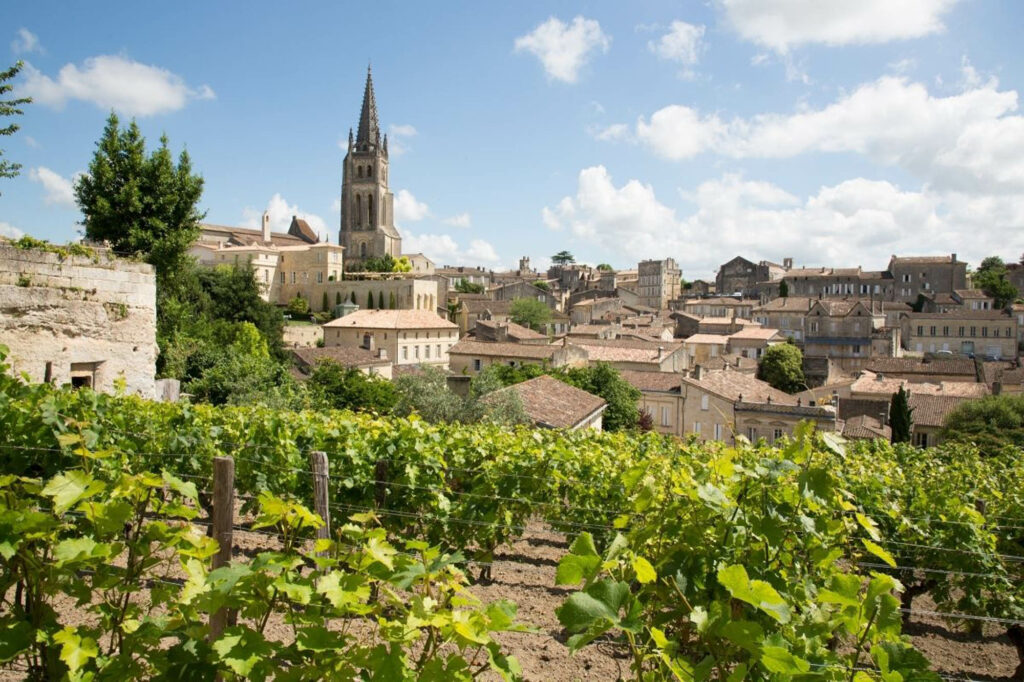
From Roman poets to medieval monks to world-famous wines, discover the story behind one of France’s most beloved villages.
The Roman Era: Early Beginnings
The history of Saint-Émilion stretches back to the 4th century, when Decimus Magnus Ausonius, a celebrated Roman poet and educator, decided to retire in the verdant countryside near what was then called Burdigala (today’s bustling city of Bordeaux).
Ausonius is celebrated as the first recorded resident of what would eventually become the village of Saint-Émilion. His presence in the area speaks to the longstanding appreciation for the region’s ideal terroir and natural resources, elements that remain integral to Saint-Émilion’s identity and the world-famous wines produced here today.
8th Century: Monastic Influence
In the 8th century, a devoted monk named Émilion arrived from Vannes in Brittany, in the northwest of France. Feeling a spiritual calling, he made a pilgrimage to this quiet corner of the Aquitaine region to live as a hermit.
He took up residence in a secluded cave carved into the area’s unique limestone cliffs, just beneath what is now the town’s remarkable monolithic church. Both of which we can still visit today!
The town adopted his name, Saint-Émilion, as a tribute to this man who lived a life of contemplation and spirituality. Émilion’s monastic lifestyle set the tone for a community focused on both spirituality and the bounty of the earth, a dual heritage the town still honors today.
12th Century: Royal Affairs
The marriage of Eleanor of Aquitaine and Henry II Plantagenet in 1152 had far-reaching implications for the region. Eleanor’s prior marriage to the King of France had ended in divorce, and with her new marriage, she brought the entire Aquitaine region, including Saint-Émilion, under English rule.
Related Article: A Brief History Of Bordeaux
This development shifted the geopolitical landscape dramatically, making the area a significant chess piece in the complex game of European politics. It also heralded centuries of tug-of-war between English and French sovereignty.
14th and 15th Centuries: The Hundred Years’ War
During the Hundred Years’ War, Saint-Émilion suffered through sieges, battles, and shifting alliances. This period of upheaval culminated in the Battle of Castillon in 1453, which took place in a field just a few kilometers from the center of Saint-Émilion.
Local Fact: The surrender was signed at Château de Pressac, a beautiful estate with fantastic views over the sea of vineyards that you can still visit today. When the French forces defeated General Talbot (founder of Châteaux Talbot) and the English army, they recaptured Bordeaux and brought the Hundred Years’ War to an end.
This pivotal moment marked a new beginning for Saint-Émilion and the entire Bordeaux region. The restoration of French rule allowed the area to slowly rebuild and regain its former prominence, especially in terms of viticulture.
16th Century: Renaissance of Winemaking
With Henry IV ascending the French throne in 1589, Saint-Émilion experienced a period of relative stability and renewed focus on agricultural and vinicultural development. This era proved instrumental in refining the viticulture techniques that would later make Saint-Émilion wines world-renowned.
Through the decades of peace that followed, local winemakers could invest time and resources into honing their craft, setting the stage for an industry that would eventually gain international fame.
1789: The French Revolution
The tremors of the French Revolution were felt even in the pastoral lands of Saint-Émilion. As revolutionary fervor spread, local inhabitants fled, leaving the town vulnerable to looting and vandalism. This exodus was a setback for the community, but it also laid the groundwork for radical societal changes.
With the passage of time and the stabilization of French governance, Saint-Émilion would eventually recover and rebuild stronger than before.
19th Century: A Resurgence in Prosperity
The 19th century marked a remarkable resurgence in prosperity for Saint-Émilion. As tastes and markets evolved, the wines from this region started capturing the attention of connoisseurs and casual drinkers alike across Europe and beyond.
This growing demand infused the local economy with new life, revitalizing not only the vineyards but also the town’s architecture and civic life. Many of the grand châteaux that dot the landscape today serve as monuments to this prosperous era.
Subterranean Quarrying Through the Centuries
Over the course of several centuries, extensive quarrying of Saint-Émilion’s unique limestone formed an intricate network of underground galleries beneath the town. These hidden tunnels have an almost mystical quality and serve as a testament to the town’s industrial past.
While quarrying has long since ceased, the subterranean network remains. Today, many of these ancient galleries have found new purpose as atmospheric wine cellars, adding an element of geological fascination that complements the area’s rich cultural and agricultural history.
1999: UNESCO World Heritage Status
The turn of the millennium brought a significant honor to Saint-Émilion: UNESCO World Heritage recognition. This designation not only affirmed the town’s extraordinary historical and cultural value but also elevated its status on the global stage. Being listed as a World Heritage Site has increased tourism and international interest, making Saint-Émilion a must-visit destination for history enthusiasts and wine lovers alike.
Saint-Émilion Today
Modern Saint-Émilion maintains a population that hovers just over 2,000, a number that has remained fairly consistent since the 19th century. This small but vibrant community continues to welcome visitors from around the world who come seeking a touch of its storied past, breathtaking landscapes, and, of course, its iconic wines.
The village is essentially a living museum, harmoniously blending its rich history with the energy of contemporary life.
Wine Tourism in Saint-Émilion
Saint-Émilion isn’t just a town steeped in history; it’s also a living, breathing epicenter for one of the world’s most esteemed wine-producing regions. Wine tourism has blossomed here in recent decades. Visitors to the village can experience firsthand the rich terroir and time-honored traditions that make the local wines so extraordinary.
Vineyard tours offer immersive experiences ranging from walking among the rows of grapevines to participating in tastings guided by expert sommeliers. Many of the prestigious châteaux that once symbolized 19th-century prosperity are now open to the public, offering a unique blend of historical architecture and modern winemaking techniques.
And those underground tunnels that once bore witness to a bustling limestone quarrying industry? They now serve as some of the most atmospheric wine cellars you’ll ever visit. From the monk Émilion’s humble cave to the grandeur of the UNESCO-recognized landscape, every corner of Saint-Émilion offers a tangible connection to the past. Each sip of its extraordinary wine feels like a journey through time.
Experience Saint-Émilion for Yourself
Visiting Saint-Émilion is one of our absolute favorites because it offers a rare opportunity to combine a love for history with a passion for wine. Imagine walking along cobbled streets that have witnessed centuries of European history unfold, then retreating to a grand château to sip on fine wines that are the product of that very history.
If you’re interested in exploring Saint-Émilion with a local guide, get in touch anytime. We’d love to show you around.