Most wine regions built their reputation one good vintage at a time. Bordeaux’s is different. It came together over two thousand years of ships, marriages, treaties, and merchants, all circling around one bend in a river. If you’ve ever wondered why a bottle labeled “Bordeaux” still carries so much weight on a wine list, in Paris or Chicago or Tokyo, the answer isn’t really about the grapes. It’s about the port.
Where Bordeaux’s Rise as a Wine Capital Begins: The Romans
Long before anyone called this place Bordeaux, there were vines growing along the Garonne. The Romans noticed what we still see today, that the gravelly soil and the river’s cooling influence made this an excellent spot for grapes, and by around the 1st century AD they’d planted accordingly. But the settlement they built here, Burdigala, was a trading post first and a wine region second. That order of operations matters. From the very start, Bordeaux’s wine and Bordeaux’s port grew up together, not separately.
The Three Centuries of English Wine
In 1152, Eleanor of Aquitaine married Henry Plantagenet, who became King Henry II of England two years later. Her dowry, in effect, was the entire Bordeaux region, and it stayed under the English crown for close to three hundred years.
The English court developed a real fondness for the pale, easy-drinking red wines coming out of Bordeaux, so much so they gave it its own name, claret. They had the money and the ships to buy it by the barrel-load, and for three centuries Bordeaux basically became England’s cellar. Even after English rule ended in 1453 (after their defeat at the Battle of Castillon, ending the Hundred Years’ War), that taste never went away. We think it’s part of why Bordeaux has always felt a little international, a little outward-facing, in a way other French wine regions don’t.
The Chartrons and the Rise of the Négociant
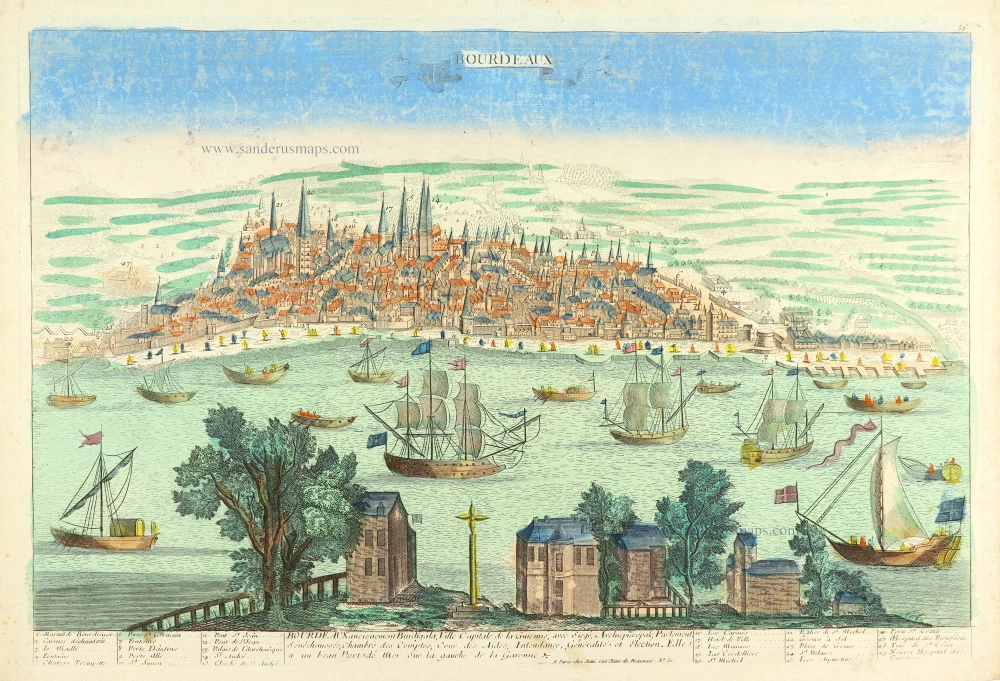
By the 1600s and 1700s, this had grown into something much bigger than a single trading relationship. Walk along the river just north of the old city center today and you’re in the Chartrons district, once home to merchant houses run by Dutch, German, Irish, and English families, all buying wine from nearby estates and selling it onward across Europe and beyond.
These weren’t simple middlemen passing barrels along. The négociants of the Chartrons blended, aged, and built the relationships that let a wine made outside a modest French city end up on tables in Amsterdam or the Caribbean. A number of the houses founded there in this period are still trading wine today, which tells you something about how well the system worked.
A River That Made Everything Possible
None of this happens without the Garonne river. It gave Bordeaux a deep, sheltered harbor, far enough inland to feel protected, but connected enough to the Atlantic that a ship could load barrels at the city’s quays in the morning and be at open sea by evening. Stand at the Place de la Bourse and look at the way the river bends through the city, and you’ll understand why locals started calling it the Port de la Lune (the Port of the Moon). It’s one of those nicknames that makes more sense once you’ve actually seen the shape it’s describing.
Sugar, Coffee, and an 18th-Century Boom
Wine was never the only thing moving through this port. Through the 1700s, Bordeaux became one of France’s major hubs for colonial trade, bringing in sugar, coffee, indigo, and slaves from French colonies in the Caribbean. That trade brought enormous wealth into the city, alongside the money already flowing in from wine.
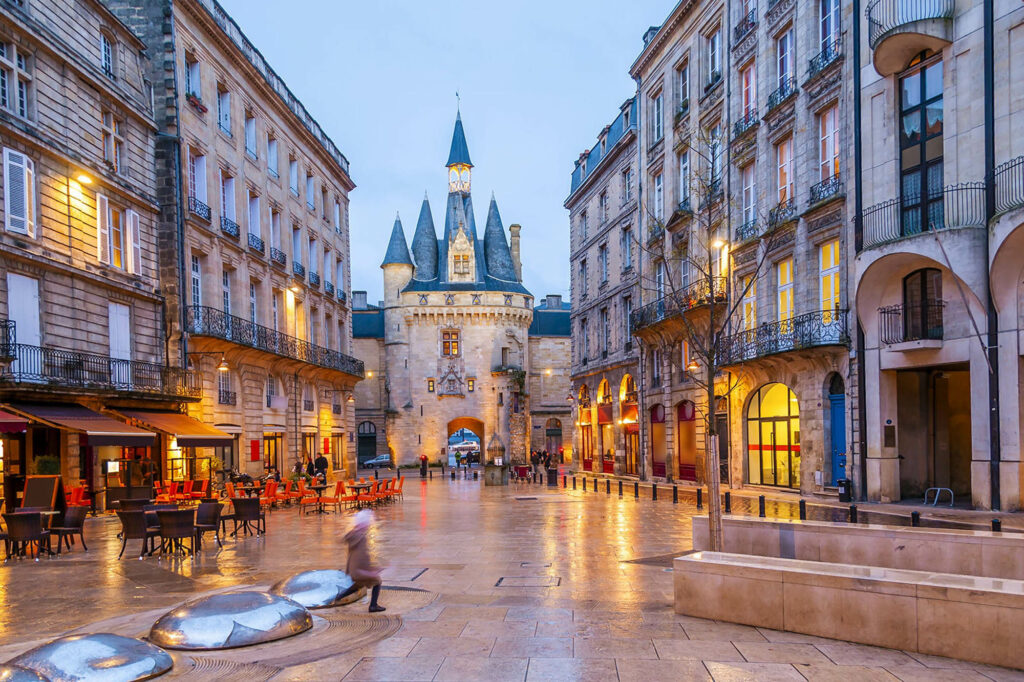
That’s the wealth behind the Bordeaux facades that you still see today, the grand townhouses, the wide boulevards, the honey-colored stone facades downtown. This golden age and the colonial slave trade system behind it can’t be separated, and residents today acknowledge the system caused real harm elsewhere in the world. Bordeaux’s beauty and its history are tangled together that way, and we’d rather a visitor know both sides of it than just the pretty one.
Thomas Jefferson’s Visit
In 1787, Thomas Jefferson passed through Bordeaux while serving as the American minister to France, and he clearly took the wine seriously. He toured several estates and kept detailed notes on what he tasted, and his writings from that trip are among the earliest attempts by an outsider to size up and rank Bordeaux’s top properties. He kept ordering wine from some of them for years afterward. It’s a small footnote in a much longer story, but we like it, because it’s a reminder that the pull Bordeaux has on visitors from far away isn’t a new thing at all.

A City Written Into the Architecture
All that trade, all that money, all those centuries, left their mark on the buildings of Bordeaux. In 2007, UNESCO added the historic center of Bordeaux to its World Heritage List, recognizing it as a remarkably intact example of 18th-century urban architecture, one that’s still lived in and used every day rather than roped off behind glass. Walk the streets between the river and the old city walls and you’re moving through the same stone that stood when the last barrels of claret were loaded for London, or when a young American diplomat first tasted something that he introduced to the White House.
Visiting the History, Not Just the Vineyards
The story of how Bordeaux became a wine capital runs through the port, the Chartrons, the grand facades downtown, and the estates just outside town, and honestly, a glass of Bordeaux tastes a little different once you’ve seen where all of it came from.
If you’re starting to think about a trip built around this history as much as the wine, we’re happy to help you put together an itinerary around what interests you most.