Saint-Émilion is a picturesque medieval village and wine appellation on Bordeaux’s Right Bank, about 45 minutes east of the city. A UNESCO World Heritage Site since 1999, it is famous for Merlot (and Cabernet Franc) reds, limestone cellars carved beneath its streets, an underground church cut from the rock, and its own Grand Cru classification. For us, it’s one of the most breathtaking villages in all of France.
Perfectly perched on a limestone plateau overlooking the Dordogne Valley, this medieval village has been growing vines since the Romans settled more than 2000 years ago. Today, its cobbled streets, golden stone façades, and rolling vineyards tell a story where wine and daily life are still inseparable.
The region’s mix of limestone, clay, and gravel soils gives its wines remarkable structure and elegance, producing reds known for balance, freshness, and fine tannins.

Merlot takes center stage on Bordeaux’s Right Bank, often blended with Cabernet Franc for depth and aromatic lift. The result is supple, fruit-driven wines that age beautifully, developing layers of truffle, spice, and dried fruit over time.
The best-known names: Château Ausone, Château Cheval Blanc, and Château Angélus, represent the heights of Bordeaux craftsmanship, but much of the region’s magic lies in its smaller, family-run châteaux. Many still welcome visitors personally, pouring wines that capture the same limestone purity and quiet intensity as their famous neighbors.
A Village Where Everything Slows Down
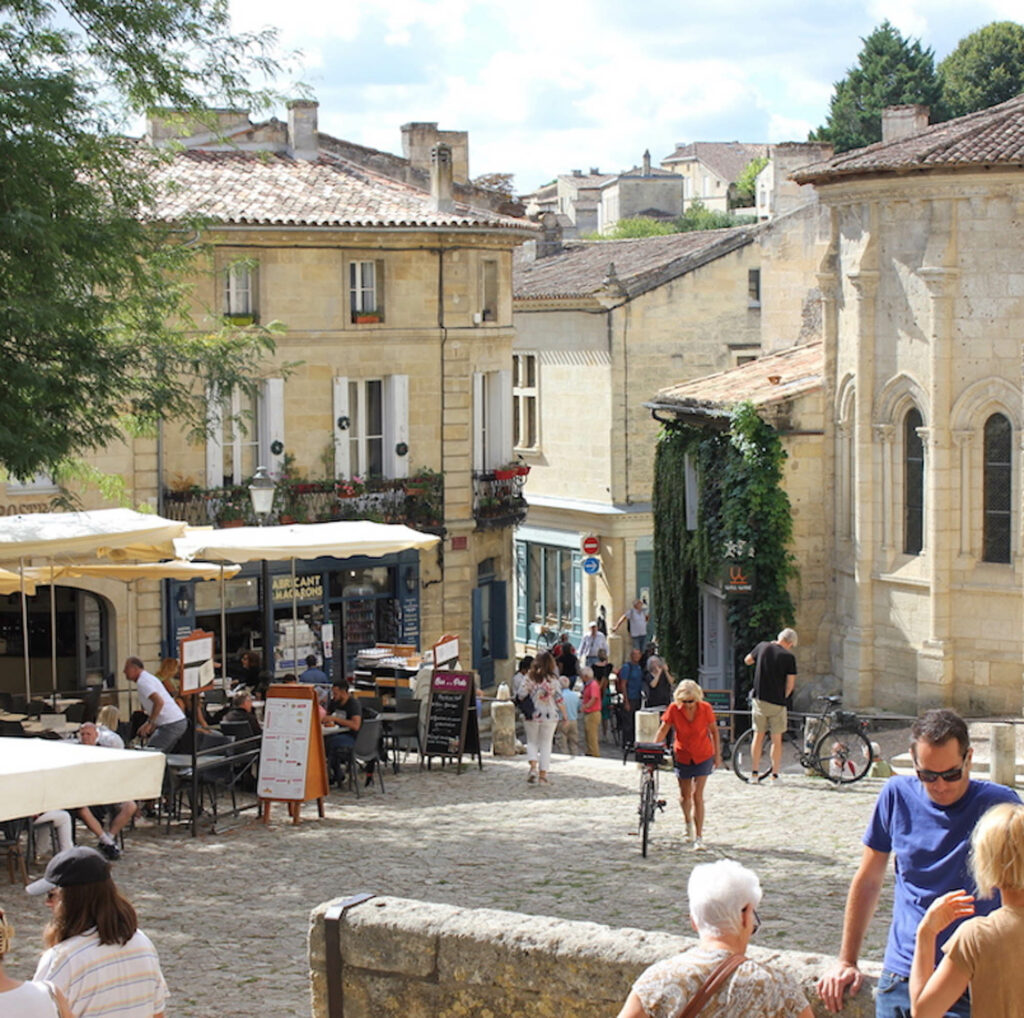
Saint-Émilion is made for wandering. You can stroll from a 12th-century cloister to a Grand Cru Classé estate in just a few minutes. In the main square, cafés spill onto cobbled terraces where locals and visitors share glasses of ruby-colored Merlot. Follow the narrow lanes up toward the bell tower for sweeping views of the vineyards, or down to the cool shadows of the monolithic church carved from the rock itself. Every turn shows another glimpse of how deeply the village and its wines are connected.
Outside the walls, the landscape rolls into hamlets and gently sloping vineyards of Saint-Christophe-des-Bardes, Saint-Laurent-des-Combes and Saint-Hippolyte. Visits and tastings here often end with stories, laughter, and the inevitable promise to return.
Food, Wine, and Memories
As you’d expect, meals in Saint-Émilion pair effortlessly with its wines. Long lunches feature ‘magret de canard’ (one of our favorite local dishes!), beef entrecôte grilled over vine cuttings, and local cheeses matched to Merlot’s plush texture. Many châteaux host intimate wine lunches or cooking experiences, where you can savor dishes made with ingredients from the region. And we won’t let you leave without trying the traditional Saint-Émilion macarons, soft, almondy, and made from a centuries-old recipe passed down through local convents.

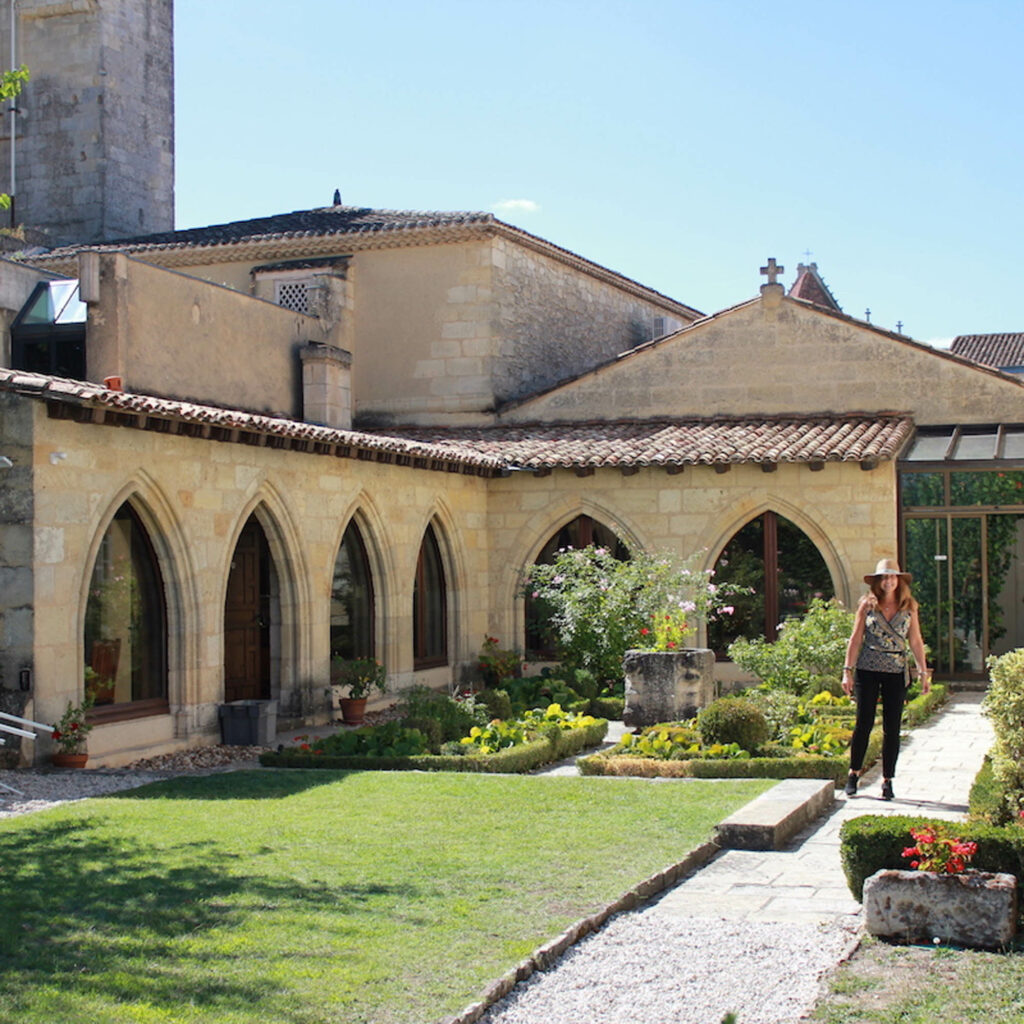
Neighboring Appellations: Just beyond the village, Lussac, Puisseguin, and Saint-Georges-Saint-Émilion offer welcoming estates and excellent wines at remarkable value. Next door, tiny Pomerol makes some of the world’s most sought-after Merlot.
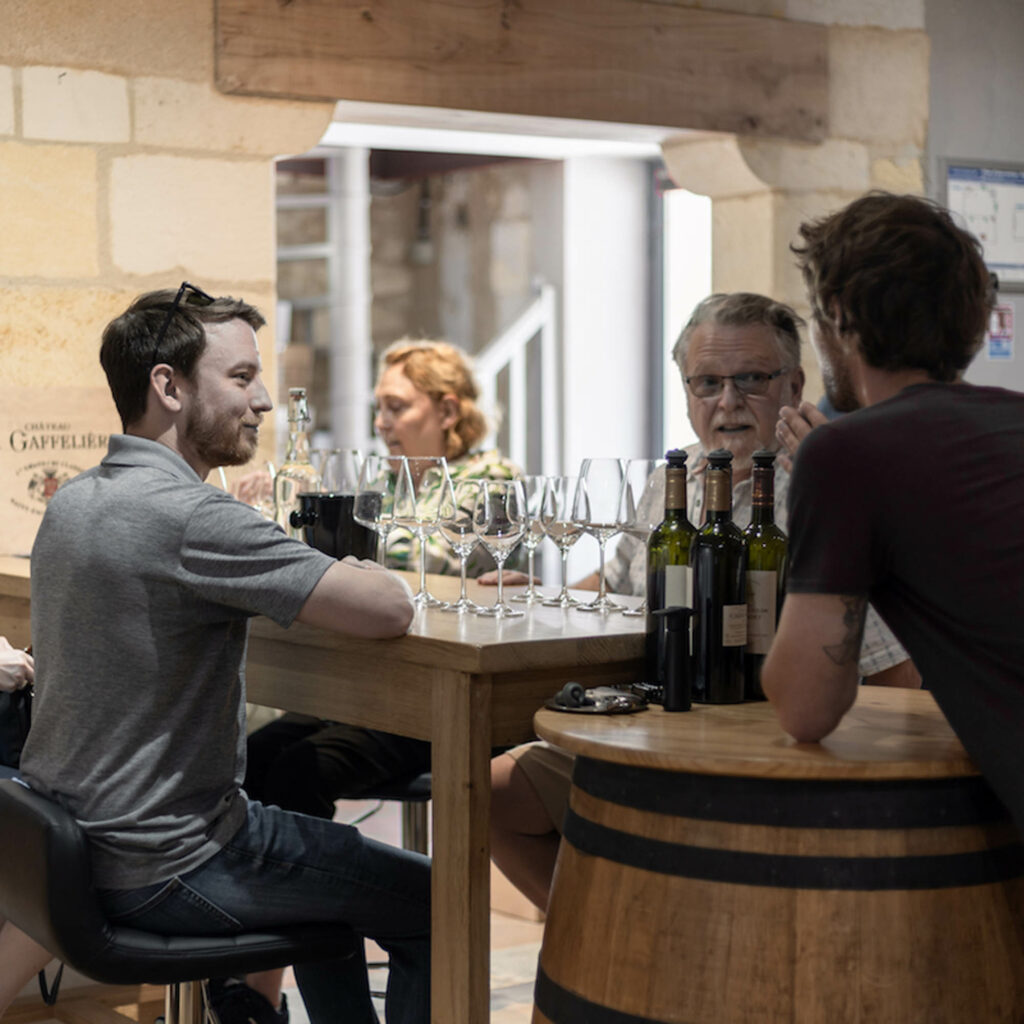
A perfect day might begin with a morning visit at a family-owned château, tasting Merlot straight from the barrel. Lunch follows on a sunny terrace overlooking the village, paired with a Grand Cru from the same soil you’ve just walked. The afternoon is for exploration — maybe the underground church, a hidden cellar, or a quiet glass at a café near the bell tower. By evening, the village glows gold in the setting sun, and you understand why Saint-Émilion remains one of the most beloved corners of Bordeaux.
A perfect day might begin with a morning visit at a family-owned château, tasting Merlot straight from the barrel.
Lunch follows on a sunny terrace overlooking the village, paired with a Grand Cru from the same soil you’ve just walked.
The afternoon is for exploration. Maybe the underground church, a hidden cellar, or a quiet glass at a café near the bell tower.
By evening, the village glows gold in the setting sun, and you understand why Saint-Émilion remains one of the most beloved corners of Bordeaux.
Craft your wine adventure effortlessly. Fill out our form or book a complimentary 20-minute phone call with a Bordeaux local, and get ready for an unforgettable journey through Bordeaux’s wine country.

Hi, I’m Daniel. I’m an American who moved to Bordeaux in 2013, married a Bordelaise, and fell in love with this city. I’d love to tell you all about it and design your dream vacation.
About 45 minutes by car, or around 35 minutes by train to the small Saint-Émilion station followed by a short walk up to the village. Most visitors come on a day trip, but staying a night lets you enjoy the village after the day visitors leave.
A full day covers the village, the underground monolithic church and two château visits. With two days, you can add Fronsac, Pomerol, the surrounding hamlets and a slower more relaxed lunch.
Yes, but only on a guided tour run by the Saint-Émilion tourist office, which also opens the catacombs and the Trinity Chapel. It’s highly recommended, and we try to include it every day in the village.
We share what we’re tasting, what’s happening in the vineyards, and behind-the-scenes stories from Bordeaux.