


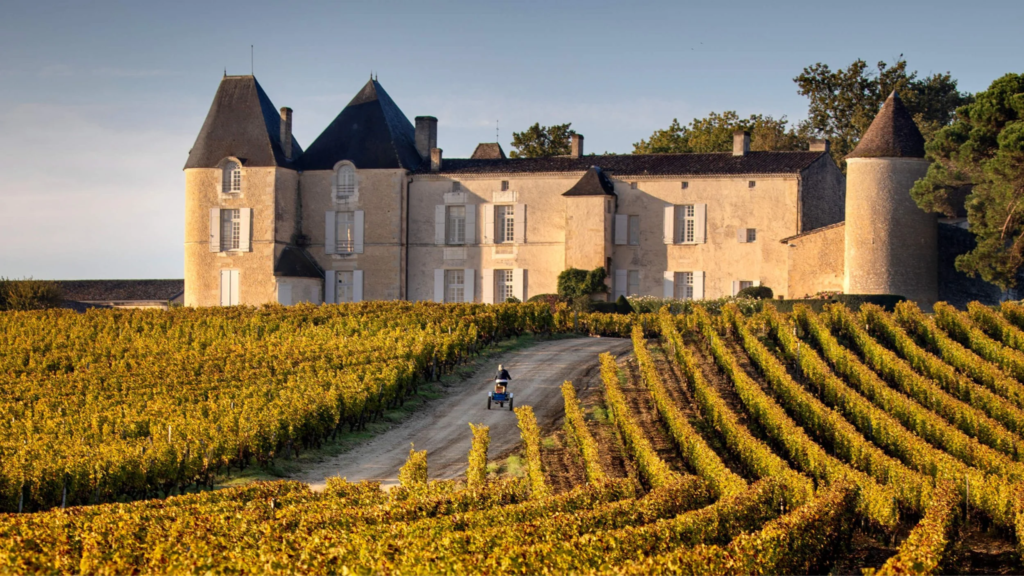
Among Bordeaux’s many famous wine estates, few names carry the same reputation as Château d’Yquem. Even visitors who know very little about wine have often heard of Yquem.
Collectors seek it out. Restaurants place it on their most prestigious wine lists. Bottles can age for decades (sometimes even generations).
But what exactly makes Château d’Yquem so special? The answer begins with a fungus, a unique climate, and a level of patience that few wineries in the world are willing to embrace.
Where Is Château d’Yquem?
Château d’Yquem sits in the heart of Sauternes, about 25 miles south of Bordeaux.
The region is best known for producing sweet white wines unlike anything else in Bordeaux. While most Bordeaux wines are dry reds, Sauternes follows an entirely different path.
The wines are sweet, intensely concentrated, and capable of extraordinary longevity. At the top of that entire category sits Château d’Yquem.
What Is Botrytis and Why Does It Matter?
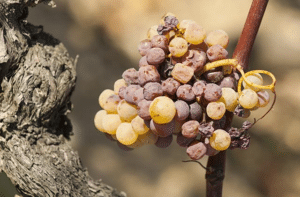
The story of Yquem starts with something most farmers usually try to avoid… A fungus known as Botrytis cinerea.
In Sauternes, however, the conditions are just right. Morning mists rise from the nearby Ciron and Garonne rivers before giving way to warm afternoon sunshine.
Under these conditions, Botrytis develops into what winemakers call “noble rot.” Rather than destroying the grapes, it slowly dehydrates them. Water evaporates. Sugars become concentrated. Flavors intensify. The result is a grape capable of producing extraordinary sweetness while still retaining freshness and acidity.
Without botrytis, Château d’Yquem would not exist.
Why Is Château d’Yquem So Rare?
Producing great Sauternes requires patience. Producing Château d’Yquem requires even more.
Unlike most estates, the grape harvesting at Yquem doesn’t happen in a single pass through the vineyard, the pickers return repeatedly, selecting only grapes that have reached the ideal stage of noble rot.
A single vine may be visited several times. Some grapes are harvested. Others are left behind. The process is slow, labor-intensive, and expensive.
Even after harvest, the selection continues. Not every vintage is released. In some years, Yquem has decided that the wine does not meet its standards and has chosen not to produce a grand vin at all. Very few estates are willing to make that sacrifice.
A History That Stretches Back Centuries
The history of Château d’Yquem stretches back hundreds of years.
The estate gained recognition long before Bordeaux’s famous 1855 Classification. When the classification was eventually created, Yquem received a distinction no other estate achieved. But before that, one of its most influential admirers was Thomas Jefferson.
During his travels through Bordeaux in 1787, Jefferson visited many of the region’s leading estates and developed a deep appreciation for its wines. Among the bottles he purchased and shipped back to America was Yquem. His writings reveal an admiration for the estate at a time when the United States was still in its infancy and Bordeaux wines were largely unknown to most Americans. Now, more than 2 centuries later, many American visitors still find themselves following a similar path through Bordeaux, discovering the wines and châteaux that captivated one of America’s Founding Fathers.
It’s no wonder it was named Premier Cru Supérieur. A category entirely its own. No other Sauternes property received the same ranking.
That designation reflected the reputation Yquem had already built over generations. The classification simply formalized what wine merchants, collectors, and travelers had recognized for decades.
Why Does Château d’Yquem Age So Well?
Many people assume sweet wines should be consumed quickly. Yquem is the exception.
The combination of sugar, acidity, concentration, and careful winemaking allows the wine to evolve for decades.
Young bottles often display notes of apricot, peach, citrus, and honey. Older vintages develop layers of caramel, saffron, dried fruit, spice, and toasted nuts.
Some bottles continue improving for fifty years or more. It’s one of the reasons collectors are willing to pay so much for exceptional vintages.
What Is It Like to Visit Château d’Yquem?
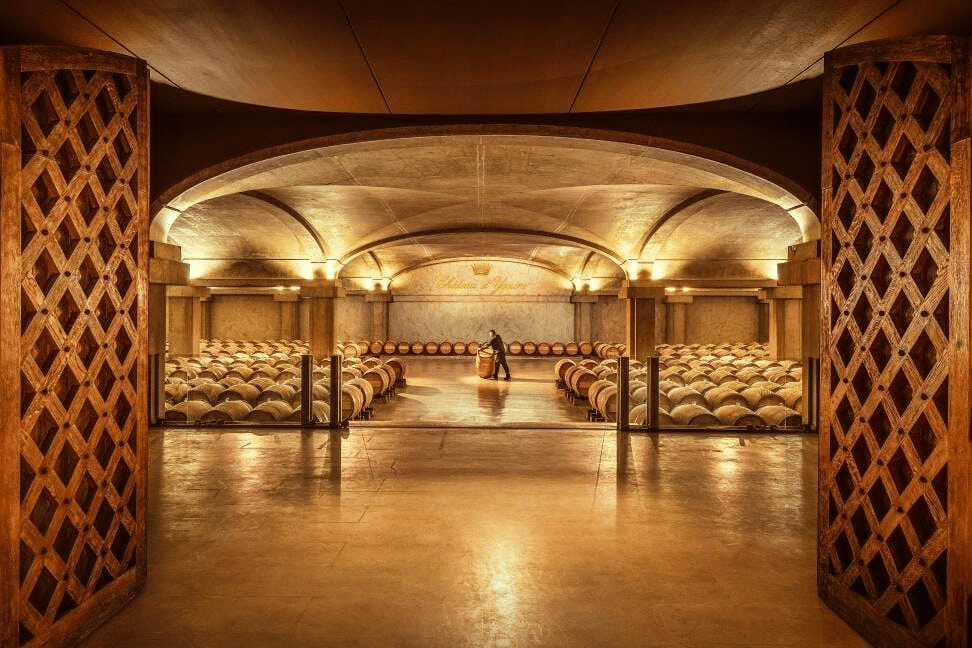
winemaking process behind one of Bordeaux’s most famous wines.
For many visitors, the experience is surprisingly understated.
There are no flashy attractions. No theme-park style visitor experience. Instead, the focus remains on the vineyards, the cellars, and the wine itself.
Visitors learn about the unique climate of Sauternes, the role of botrytis, and the painstaking selection process that defines every vintage.
The tasting is often the highlight (although we think that the cellar is a close second!).
Even people who believe they don’t enjoy sweet wines are frequently surprised by the balance. The sweetness is obvious, but so is the freshness. The wine never feels heavy.
Is Château d’Yquem Worth Visiting?
For travelers interested in wine, history, and craftsmanship, we would say yes, absolutely.
The visit offers something very different from a traditional Médoc château experience. It tells the story of a wine that depends on weather, patience, risk, and an unusual natural process that cannot be replicated easily elsewhere.
It also helps visitors understand why Sauternes remains one of Bordeaux’s most distinctive wine regions.
Even among Bordeaux’s famous estates, Château d’Yquem stands apart. Not because it is the largest. Not because it is the oldest. But because the combination of place, climate, botrytis, and tradition has created something genuinely unique. That uniqueness is what has kept wine lovers fascinated for centuries.
Sources
- Château d’Yquem Official Website (Château d’Yquem 2023)
- Hugh Johnson’s (Pocket Wine Book 2026)
- The Sotheby’s Wine (Wine Alchemy)
- Thomas Jefferson in Bordeaux (Why Thomas Jefferson Fell in Love With Bordeaux)