


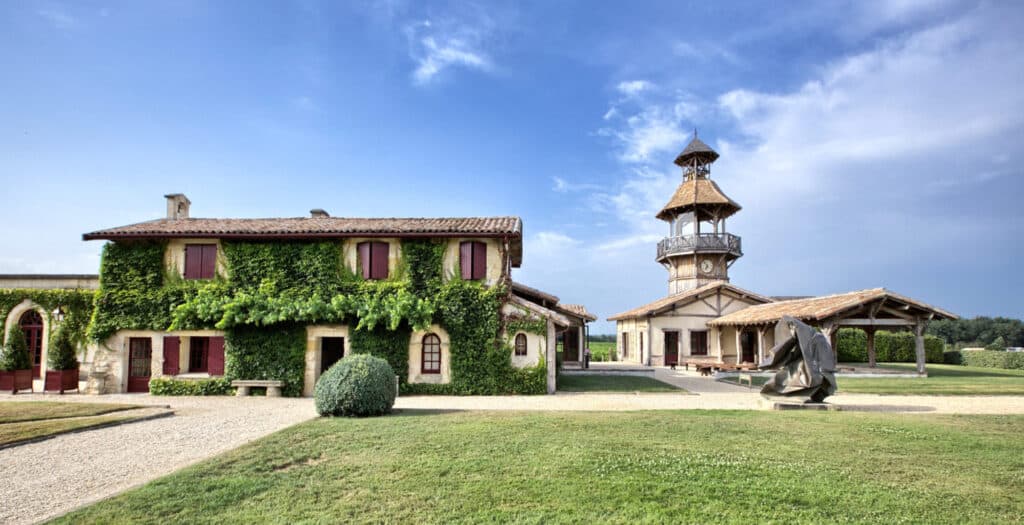
Pessac-Léognan doesn’t get quite the same recognition as Margaux or St-Émilion, but spend an afternoon at Château Smith Haut Lafitte and you’ll understand why so many visitors leave calling it their favorite stop in Bordeaux. This is a serious working estate, set in genuinely beautiful surroundings, run by people who have clearly thought hard about what it means to welcome guests well.
A Corner of Pessac-Léognan Worth Slowing Down For
Pessac-Léognan sits just south of the city of Bordeaux, close enough that you could visit on a half-day trip and still have time for lunch back in town. Few appellations in the region are classified for both reds and whites, and Smith Haut Lafitte is one of the clearest examples of why that matters. The estate is a Cru Classé de Graves for both colors, which is less common than people assume. Plenty of famous Bordeaux names built their reputation on red alone.
The White That Changes People’s Minds About Dry Bordeaux
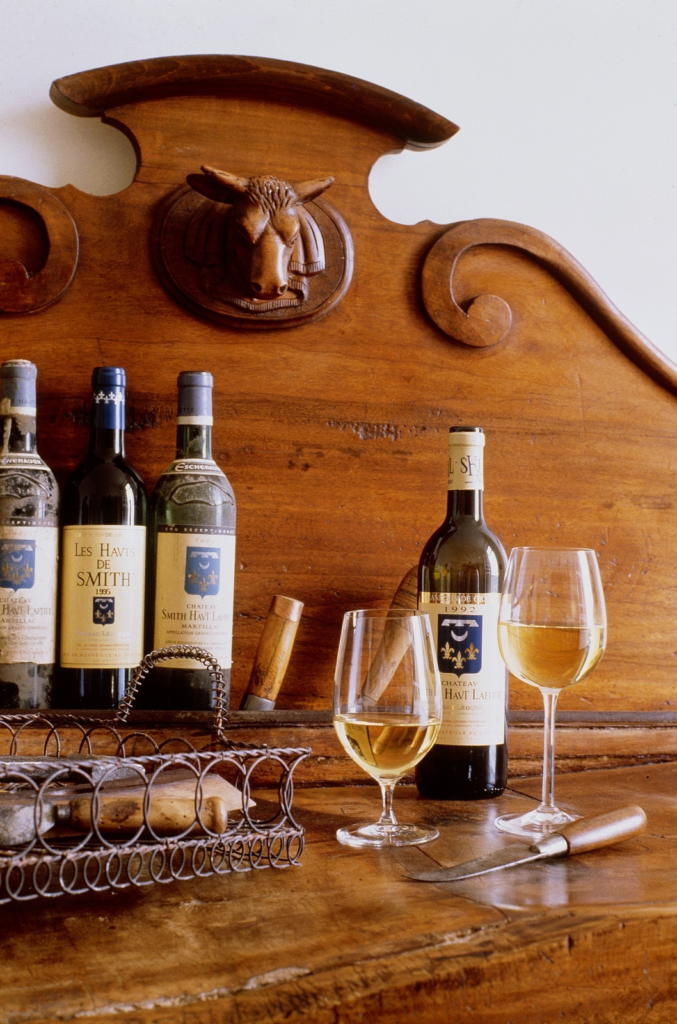
in a region known mostly for reds.
If you only know Bordeaux for its reds, the white here is the wine to reconsider that assumption over. Built mostly from Sauvignon Blanc, it’s layered and textured in a way dry white Bordeaux rarely gets credit for outside the region. People who came expecting Cabernet and Merlot end up talking about the white on the drive home.
Architecture, Forest, and a Landscape That Does Its Own Talking
The property itself is worth the visit regardless of what ends up in your glass. The château grounds mix centuries-old stone architecture with newer additions that never feel out of place, and the estate sits inside real woods and vines instead of being squeezed between roads. The Cathiard family has preserved a stretch of that forest, the Forest of the Senses, as a dedicated walking space, threading a quiet, art-filled trail through the trees.
Sculpture in the Vines and Art in the Woods
Art is woven into the estate on purpose, not scattered around as decoration. A bronze hare stands sentinel near the entrance, one of dozens of sculptures placed through the vineyard and around the buildings over the decades the Cathiards have owned the property. The forest continues that idea as a proper open-air museum: contemporary pieces, mostly by local artists, set among the trees for visitors to stumble on rather than find on a map. Art and viticulture aren’t an obvious pairing, but the estate has had thirty years to get the balance right.
Smith Haut Lafitte and the Royal Stamp of Approval
In September 2023, King Charles III visited Château Smith Haut Lafitte during his state visit to France, choosing it as the only wine estate on his itinerary that trip. Given his long-standing interest in organic and sustainable farming, the appeal is easy to see. The estate is owned by Daniel and Florence Cathiard and farmed under what they call their “Bio-Precision” philosophy, a blend of traditional methods and modern ecological science that has defined the property since the Cathiards took over in 1990. Certain parcels are still plowed by horse, where a tractor would compact the soil. The estate has been certified organic since 2019, uses natural plant treatments instead of synthetic chemicals, and tracks grape ripeness plot by plot using satellite imagery and drones.
It wasn’t his first time in the region, either. Charles toured Château Latour back in 1977, on a trip that also included a stop at Bordeaux’s town hall and, reportedly, a gift of 12 magnums of Bordeaux wine from 1948, the year of his birth.
Farming That Takes the Long View
Daniel and Florence Cathiard bought the estate in 1990 and have spent the decades since farming it with real intention, including biodynamic-style practices and the use of horses to plow certain parcels where a tractor would compact the soil. It’s the kind of detail that’s easy to read on a fact sheet and much more interesting to see in person, standing at the edge of a row while a horse works the ground a few feet away.
Wine and Wellness at Smith Haut Lafitte
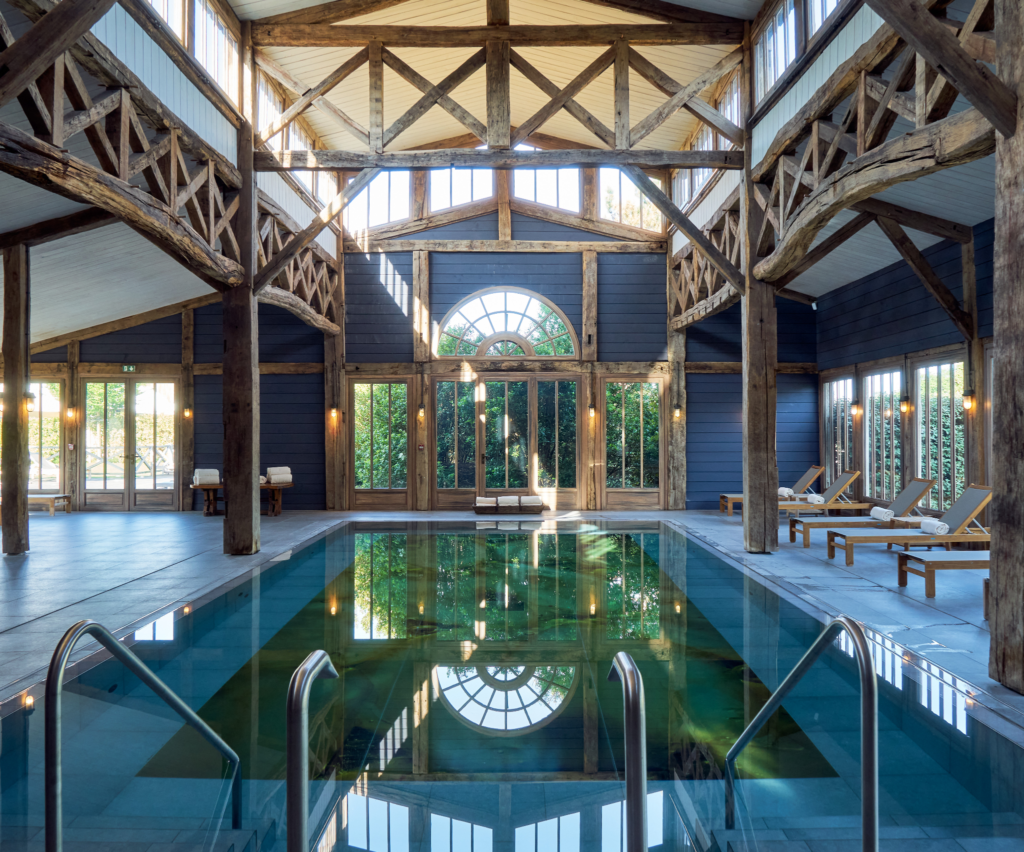
The Cathiards’ daughter, Mathilde, founded Caudalie, the skincare line built around polyphenols drawn from grape seeds, right there on the property. That connection is why the estate is also home to Les Sources de Caudalie, a hotel and spa built around vinothérapie treatments, wine-based body treatments that use the same compounds found in the winemaking process. Modern luxury hospitality built directly into a working château, rather than added on nearby, is a rare setup for this part of the world. You don’t need to book a treatment to appreciate the estate, but it does mean a visit here can be as restorative as it is educational.
A Slow Afternoon at Smith Haut Lafitte
A good tasting moves slowly here: through the vines, into the underground cellar, past the on-site cooperage where barrels are built by hand, and finally to a table for the current releases with some context on the vintage behind them. A larger group moving through on a set schedule doesn’t get much room to linger at the parts that catch their interest, whether that’s the biodynamic farming, the sculpture trail, or just a second pour of the white.
On our private tours, we build in the time for that kind of lingering. Smith Haut Lafitte pairs naturally with a day spent in Pessac-Léognan or the wider Graves region, and we’re glad to work it into an itinerary alongside other estates nearby, or as a quieter counterpoint to a day in the Médoc.
Worth the Detour
Between the horse-plowed rows, the sculpture-lined forest, and a glass of white that tends to surprise people who didn’t expect it, Smith Haut Lafitte is the kind of stop people bring up unprompted weeks after the trip is over.
Sources
- Château Smith Haut Lafitte: (Discover Smith Haut Lafitte)
- Forest of the Senses: (10-Hectare Open-Air Museum)
- Les Sources de Caudalie: (Vinotherapie Spa)
- BWV 4-Day Best of Bordeaux Tour: (Four Day Bordeaux Wine Tour Itinerary Example)