

Two legendary wine regions, one big question: what actually makes them different? Napa Valley and Bordeaux.
Two names that dominate conversations among wine lovers. Both produce some of the world’s most celebrated wines, both attract millions of visitors each year, and both have earned legendary status in the wine world. But despite their shared fame, these two regions couldn’t be more different. From the grapes they grow to the way they welcome visitors, Napa and Bordeaux offer distinct experiences shaped by centuries of history (or in Napa’s case, a much shorter but equally impressive journey). Whether you’re planning your next wine trip or simply want to understand what sets these regions apart, this guide breaks down everything you need to know. No bias, no favoritism. Just an honest comparison of two extraordinary wine destinations.
A Tale of Two Regions
The first and most striking difference between Bordeaux and Napa is time.
Bordeaux has 2,000 Years of Winemaking
Bordeaux’s wine history stretches back to Roman times. The Romans planted the first vines here around the 1st century AD, and the region has been producing wine continuously ever since. By the Middle Ages, Bordeaux wines were already famous across Europe, shipped to England by the barrel during the 300-year English rule of Aquitaine. The 1855 Classification, still in use today, ranked Bordeaux’s top estates over 150 years ago. Many of these châteaux have been owned by the same families for generations, with winemaking traditions passed down like heirlooms.
Related Article: A Brief History Of Bordeaux
Napa Valley has 150 Years of Innovation
Napa’s story is much younger but no less remarkable. Commercial winemaking began in the 1860s, was nearly destroyed by Prohibition (1920 to 1933), and only truly flourished in the latter half of the 20th century. The famous 1976 “Judgment of Paris,” when Napa wines beat top French wines in a blind tasting, put the region on the world map. Since then, Napa has become synonymous with premium American wine, built on innovation, ambition, and a willingness to experiment.
What Does This Mean for Travelers?
In Bordeaux, you’ll feel the weight of history at every turn: ancient cellars, centuries-old vines, and traditions that have barely changed. In Napa, you’ll experience the energy of a region still defining itself, with cutting-edge facilities and winemakers eager to try new things. Neither approach is better; they simply offer different perspectives on what wine can be.
Climate and Geography
The weather shapes everything about wine, and Bordeaux and Napa couldn’t be more different in this regard.
Bordeaux Climate: Maritime and Unpredictable
Bordeaux sits near the Atlantic Ocean, giving it a maritime climate with mild winters, warm (but not hot) summers, and plenty of rainfall. This means vintage variation matters enormously in Bordeaux. A rainy harvest can produce lighter wines, while a hot, dry year can yield something exceptional. This unpredictability is part of Bordeaux’s charm, and also its challenge. Winemakers here must adapt to what nature gives them each year, which is why blending multiple grape varieties is so essential.
Napa Valley Climate: Warm and Consistent
Napa enjoys a Mediterranean climate with warm, dry summers and mild winters. The valley floor can get quite hot, while hillside vineyards benefit from cooler temperatures and morning fog rolling in from the San Francisco Bay. The consistent sunshine means Napa grapes ripen fully almost every year, producing rich, powerful wines with less vintage variation than Bordeaux. Winemakers have more control here. The weather is a reliable partner rather than a wildcard.
How Does Climate Affect the Wines?
Bordeaux’s cooler climate produces wines with higher acidity, more subtle fruit, and firm tannins that soften beautifully with age. Napa’s warmth creates riper, fruit-forward wines with softer tannins and higher alcohol. These wines are delicious young, though the best can age as well.
The Grapes
Walk into any wine shop and you’ll notice something immediately: Bordeaux wines are labeled by place, while Napa wines are labeled by grape. This reflects a fundamental philosophical difference.
Bordeaux: The Art of the Blend
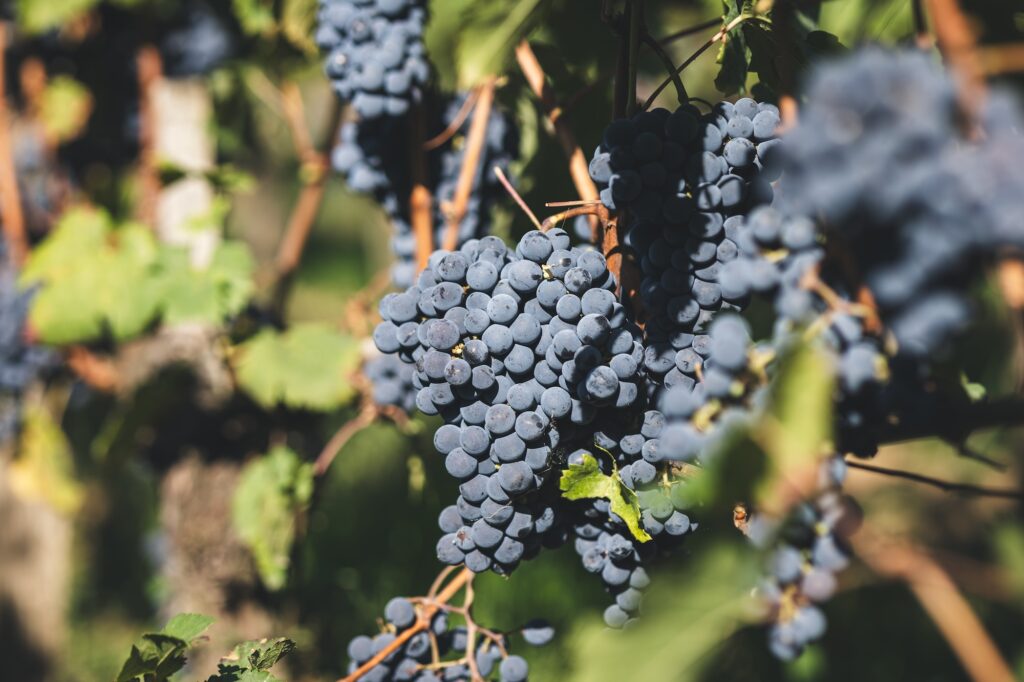
Bordeaux is blending country. Red Bordeaux typically combines Cabernet Sauvignon, Merlot, Cabernet Franc, Petit Verdot, and sometimes Malbec. White Bordeaux blends Sauvignon Blanc and Sémillon. The exact proportions depend on the sub-region. On the Left Bank (Médoc, Margaux, Pauillac), Cabernet Sauvignon dominates, creating structured, age-worthy wines. On the Right Bank (Saint-Émilion, Pomerol), Merlot takes the lead, producing softer, more approachable wines.
Why blend? Because Bordeaux’s variable climate means different grapes perform better in different years. Blending allows winemakers to create balanced wines regardless of what nature throws at them.
Napa Valley: Cabernet is King
Napa is Cabernet Sauvignon territory. While other varieties grow here (Merlot, Chardonnay, Sauvignon Blanc), Cabernet dominates the landscape and the reputation. Many Napa Cabs are 100% varietal or close to it. This single-variety focus reflects both the climate (warm enough to ripen Cabernet fully every year) and the market (American consumers prefer varietal-labeled wines). The result is bold, powerful wines that showcase the grape’s full potential.
Related Article: Sipping on Science: The Fabulous Five Grape Varieties of Bordeaux
The Producers: Château vs. Winery
Who makes the wine matters as much as where it’s grown, and the producer landscape in each region tells a very different story.
Bordeaux Has Generations of Family Ownership
Many Bordeaux estates have been family-owned for generations, sometimes centuries. Names like Moueix, Lurton, and Thienpont appear across multiple properties, with knowledge passed from parent to child. Even when estates change hands, there’s often a sense of stewardship rather than ownership. The land and its reputation matter more than any individual.
Winemakers see themselves as caretakers of something larger than themselves. That said, Bordeaux also has its share of corporate and investment ownership, particularly among the most prestigious properties. Luxury groups and international investors have acquired several famous châteaux in recent decades.
Napa Valley Has Entrepreneurs and Corporations
Napa’s producer landscape is more diverse. You’ll find everything from small, family-run operations to massive corporate-owned brands. Many wineries were founded by first-generation winemakers, entrepreneurs who came to Napa with a dream and built something from scratch.
Corporate consolidation has also shaped Napa. Large wine companies own many well-known labels, sometimes producing wines from multiple properties under different brand names. This doesn’t necessarily affect quality, but it does create a different dynamic than Bordeaux’s estate-focused model.
What Does This Mean for Visitors?
In Bordeaux, you’re more likely to meet family members or long-tenured staff with deep connections to the property. In Napa, you might meet the founder who planted the first vines, or a professional tasting room team at a corporate-owned winery. Both can offer wonderful experiences; they’re just different flavors of hospitality.
The Tasting Experience
Planning a wine trip? Here’s where the practical differences really show up.
Visiting Bordeaux
- Appointments required: Most Bordeaux châteaux require advance reservations. You can’t simply show up and expect a tasting, especially at prestigious estates.
- Tastings are often free or low-cost: Many châteaux offer complimentary tastings or charge modest fees (€30 to €50). Even top estates rarely charge more than €100.
- Formal and educational: Visits typically include a tour of the cellars and vineyards, with detailed explanations of winemaking. The focus is on learning, not just drinking.
- Smaller groups: Private appointments mean intimate experiences, often with just your party and a guide.
- Language: English tours are widely available, though booking in advance helps ensure availability.
Visiting Napa Valley
- Walk-ins welcome at many wineries: While reservations are increasingly recommended (especially post-COVID), many Napa wineries still accept drop-in visitors.
- Tasting fees are standard: Expect to pay $50 to $150 or more per person for a standard tasting. Premium experiences (reserve tastings, food pairings) can run $170 to $300 or higher.
- Casual and social: Napa tasting rooms are designed for enjoyment. Beautiful architecture, outdoor seating, food pairings, and a relaxed atmosphere are the norm.
- Larger groups: Popular wineries can feel busy, especially on weekends. Some tasting rooms operate more like bars than private tours.
- Amenities: Many Napa wineries offer experiences beyond tasting, including wine and food pairings, blending seminars, cave tours, picnic grounds, and more.
Tour Styles Compared
In Bordeaux, a wine tour typically means a guide driving you to several châteaux for private appointments. The pace is relaxed, the focus is educational, and the experience feels exclusive. Private tours are the norm.
In Napa, you have more options: self-driving between wineries, joining a group tour on a shuttle or party bus, hiring a private driver, or even taking the Wine Train. The vibe is more social and entertainment-focused. Neither is right or wrong. They simply cater to different preferences.
If you want to learn deeply about wine and terroir, Bordeaux delivers. If you want a fun, social day out with great wine, Napa excels.
The Wine Itself
Let’s talk about what ends up in your glass.
Bordeaux Style
Classic Bordeaux wines are known for structure, elegance, and age-worthiness. Expect flavors of blackcurrant, plum, cedar, tobacco, and earth. The tannins can be firm when young, softening into velvet with time. Acidity is typically higher, giving the wines freshness and food-friendliness.
Great Bordeaux often needs 10 to 20 years (or more) to reach its peak, though plenty of wines drink well younger. The best vintages can age for 50 years or longer.
Napa Style
Napa Cabernet is bold, ripe, and fruit-forward. Expect flavors of blackberry, cassis, vanilla, chocolate, and toasty oak. The tannins are often softer and more approachable, with a plush, velvety texture. Alcohol levels tend to be higher (14 to 15% or more is common).
Many Napa wines drink beautifully on release, though top examples can age gracefully for 20 years or more. The style is immediately impressive. These are wines that make an impact from the first sip.
A Simple Analogy
If Bordeaux is a tailored suit (elegant, refined, revealing its quality over time), Napa is a luxury sports car: powerful, thrilling, and impossible to ignore. Both represent excellence; they just express it differently.
Affordability and Value
Let’s talk money. Both regions span a wide range of prices, but the value proposition differs.
Entry-Level Wines ($15 to $30)
Bordeaux offers excellent value at this level. Appellations like Côtes de Bordeaux, Bordeaux Supérieur, and lesser-known communes produce well-made wines that over-deliver for the price. A $20 Bordeaux can be genuinely delicious.
Napa struggles at this price point. Land and production costs are so high that true Napa Valley wines rarely drop below $30 to $40. “California” labeled wines at lower prices often source grapes from outside Napa.
Winner at entry-level: Bordeaux, easily.
Mid-Range Wines ($40 to $80)
Bordeaux shines here too. For $50 to $80, you can access excellent Cru Bourgeois estates, well-regarded Saint-Émilion Grand Crus, and even wines from prestigious communes like Margaux or Pauillac (just not the famous classified growths).
Napa becomes competitive at this level. You’ll find solid wines from established producers, though many critics argue Bordeaux still offers better value.
Winner at mid-range: Bordeaux has the edge, but Napa is respectable.
Premium Wines ($100 to $300)
Both regions deliver outstanding quality at this price.
Bordeaux gets you into classified growth territory: second and third growth estates, top Saint-Émilion Grand Crus Classés, and excellent Pomerols.
Napa offers “cult” Cabernets and wines from prestigious vineyards and producers. These are serious wines that compete with anything in the world.
Winner at premium: Personal preference. Both deliver excellence.
Trophy Wines ($300 and Up)
The stratosphere. First Growth Bordeaux (Lafite, Latour, Margaux, Haut-Brion, Mouton) competes with Napa’s most exclusive names (Screaming Eagle, Harlan, Scarecrow). At this level, you’re paying for rarity, reputation, and prestige as much as liquid quality. Both regions have wines that command $500 to $1,000 or more per bottle.
Winner at trophy level: A tie. Your wallet weeps either way.
Tasting Trip Costs
A day of wine tasting in Bordeaux might cost €0 to €100 in tasting fees total (many tastings are free with a tour). In Napa, budget $150 to $400 or more per person for a day of tastings. Add accommodation: a nice hotel in Bordeaux city runs €150 to €250 per night; comparable lodging in Napa costs $300 to $500 or more per night.
Overall, Bordeaux tends to be more affordable for wine travelers, especially when factoring in tasting fees and mid-range wines.
The Visitor Experience Beyond Wine
Wine is the star, but what else do these regions offer?
Bordeaux
- A world-class city: Bordeaux city is a UNESCO World Heritage site with stunning 18th-century architecture, excellent restaurants, and vibrant culture.
- History everywhere: Roman ruins, medieval villages (Saint-Émilion is a highlight), and centuries of stories waiting to be discovered.
- Incredible food: Atlantic oysters, duck confit, canelés, local cheeses, and one of France’s best food scenes.
- Gateway to France: Easy access to the Dordogne, Basque Country, Cognac, and beyond.
Napa Valley
- Stunning natural beauty: Rolling hills, manicured vineyards, and that golden California light.
- Food paradise: Farm-to-table dining, Michelin-starred restaurants (The French Laundry is here), and world-class culinary experiences.
- Activities beyond wine: Hot air balloon rides, the Wine Train, spa resorts, cycling, and more.
- San Francisco proximity: Just an hour from one of America’s greatest cities.
Which Should You Visit?
Here’s the honest truth: both regions deserve a place on your wine travel bucket list. They offer fundamentally different experiences, and choosing between them depends on what you’re looking for.
| Choose Bordeaux If… | Choose Napa If… |
|---|---|
| You love history, tradition, and heritage | You prefer a casual, relaxed atmosphere |
| You want intimate, private château visits | You like the flexibility of walk-in tastings |
| You appreciate elegant, age-worthy wines | You love bold, fruit-forward wines |
| You’re looking for better value (especially mid-range) | You want easy logistics and everything in English |
| You want to combine wine with European travel | You want a quick trip from the US West Coast |
| You want to learn deeply about terroir and winemaking | You want a fun, social wine-tasting experience |
The Bottom Line
Comparing Napa and Bordeaux is a bit like comparing New York and Paris. Both are world capitals in their own right. Both offer extraordinary experiences. And both attract people who are passionate about what they do.
Napa brings ambition, innovation, and a distinctly American energy to winemaking.
Bordeaux offers centuries of tradition, terroir-driven elegance, and a connection to wine history that few places can match.
If you’ve only explored one of these regions, the other will open your eyes to a completely different expression of what wine can be. And if you haven’t visited either yet? You have two incredible adventures waiting for you. À votre santé, and cheers!